Serving Fairfield, CA and surrounding areas. (707) 750-8563
Vehicle towed by police in Fairfield? We walk you through where it is, what documents you need, and what the fees will be - so you get your vehicle back without extra trips or surprises.
Police towing in Fairfield, CA is a law-enforcement-ordered vehicle removal - the officer contacts a company from the agency's approved rotation list, the vehicle is transported to a licensed storage facility, and daily fees begin accumulating until the owner completes the release process, typically within a few days.
This is different from arranging a tow yourself. You do not choose the company, and the timeline is controlled by the law-enforcement agency and storage facility rather than by you. A police tow can happen after a collision on I-80, a DUI stop, an arrest, an expired registration, or a parking violation in a restricted zone - the reason matters because it can affect whether you need a police release before pickup and what documentation the storage facility requires. When your vehicle needs longer-term secure storage after a police-ordered tow, our vehicle storage service covers that need. If your vehicle was damaged in the incident that led to the tow, our accident recovery service handles collision-related vehicle recovery as well.
If you return to where you left your vehicle and it is not there, check whether it was towed before assuming it was stolen. Contact the Fairfield Police Department's non-emergency line to confirm a tow was ordered and to find out which storage facility has it. Every hour you wait is more storage fees accumulating.
California law requires storage facilities to notify registered owners and lienholders after a police-ordered tow. If you receive a notice, act on it promptly - storage fees accumulate daily, and the longer your vehicle sits, the higher the total owed when you go to retrieve it.
Every day your vehicle sits in the impound yard, the daily storage rate adds to what you owe. If you cannot retrieve it immediately, call the storage facility to understand the current daily rate and total owed so far, and ask whether there is a dispute process for any charges you believe are incorrect.
The release process involves the storage facility, possibly the Fairfield Police Department, and specific documents that vary depending on why the tow was ordered. Getting one step wrong means another trip. Call the storage facility first - they can walk you through exactly what to bring so your first visit is your only visit.
Momentum Fairfield Heavy Duty Towing Service is on the law-enforcement rotation for police-ordered tows in the Fairfield area. When an officer calls, we dispatch the right equipment for the vehicle type, document the vehicle's condition before loading, and transport it to a licensed storage facility. Every step of the process is handled by trained operators who know the difference between a careful hookup and one that causes damage during loading - and who give you the storage facility's contact information on the spot so you can start the retrieval process right away. For situations that go beyond a standard police tow - such as vehicles damaged in a collision that require more involved recovery - our vehicle storage and accident recovery services cover those needs as part of the same response.
California's Vehicle Code sets out specific requirements for police-ordered tows, including notifications to registered owners, itemized fee statements, and the right to request a hearing to contest a tow you believe was improperly ordered. We operate within those rules - not around them - which means you get the documentation you are entitled to without having to ask.
For police-ordered removals from I-80, Fairfield surface streets, and nearby roads - we respond to the agency's call and arrive with the right equipment.
For vehicle owners who need a clear record of their vehicle's condition before loading - a professional operator documents pre-existing damage at the scene.
For vehicles being moved to an approved impound facility after a police-ordered tow - we transport safely and provide the facility's contact details to the owner.
For vehicle owners who are unsure what to bring or whether a police release is required - we walk you through the steps so you make one trip, not three.
Fairfield sits directly on Interstate 80, one of the busiest freight and commuter corridors in Northern California. Incidents on or near I-80 - collisions, disabled vehicles, and traffic stops - are a primary driver of police-ordered tows in the area, and the high traffic volume means law enforcement moves quickly to clear the roadway. The presence of Travis Air Force Base on Fairfield's eastern edge creates a distinct traffic pattern on roads like Air Base Parkway, and vehicles stopped near base access points may involve additional steps in the retrieval process depending on exactly where the vehicle was located. Solano County and the City of Fairfield have their own frameworks for how police-tow rates are set and how the release process works - because these rules can change, it is always worth confirming current fees and required documents directly with the storage facility and the Fairfield Police Department. We serve communities throughout the corridor including Vallejo and Benicia.
Fairfield and the surrounding Solano County area see higher law-enforcement activity around major events at the Solano County Fairgrounds and during holiday weekends when DUI checkpoints are more common on local roads. These periods can produce a higher volume of police-ordered tows, which may mean slightly longer wait times at storage facilities. The California Highway Patrol handles incidents on I-80 and state highways, while the Fairfield Police Department covers city streets - knowing which agency ordered the tow matters when you are trying to obtain a release document.
When an officer orders a vehicle removed - after a collision on I-80, a DUI stop, an arrest, or a parking or registration violation - they contact a company from the agency's approved rotation. You do not choose the company. The officer documents the vehicle's condition and the reason for the tow.
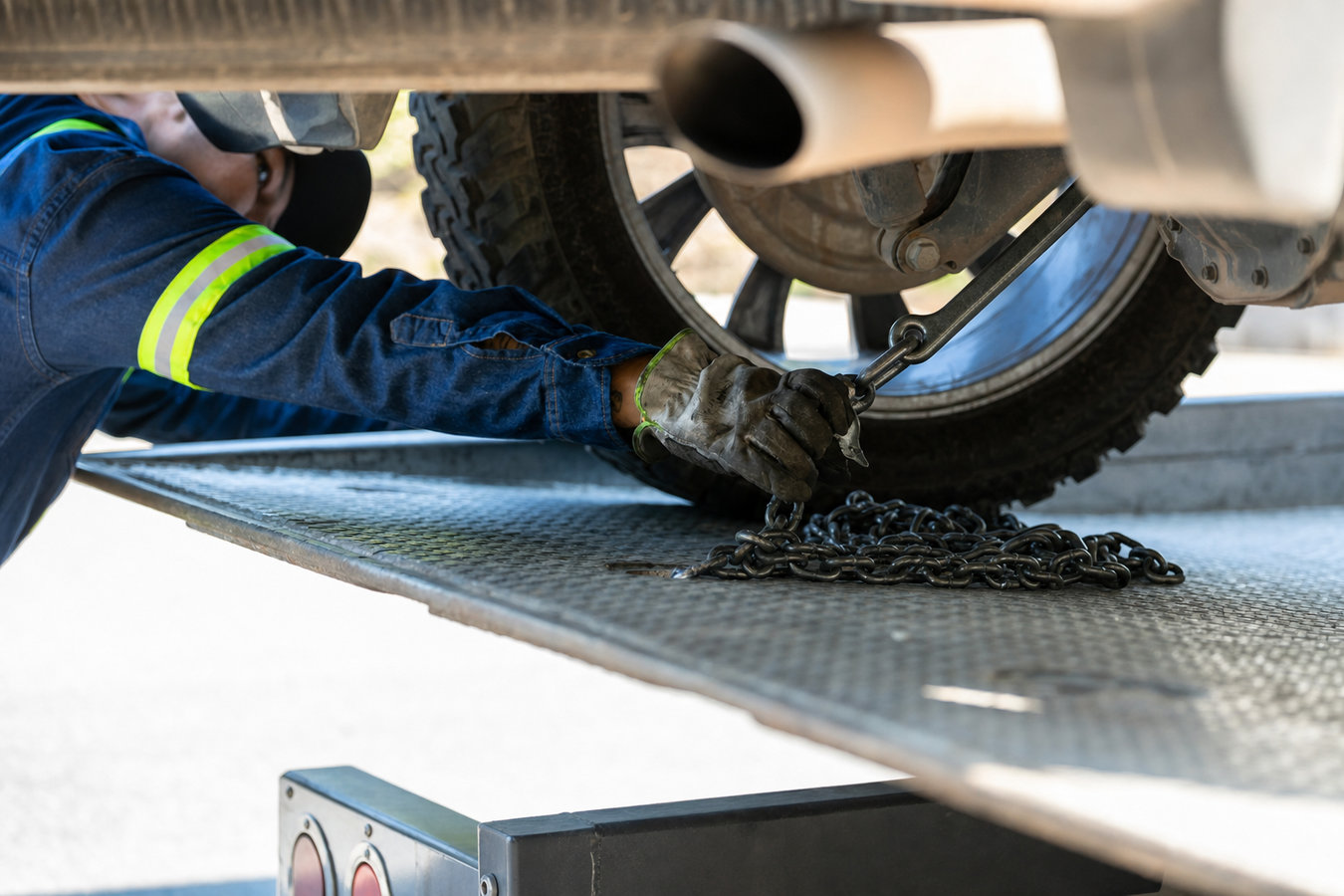
The tow operator arrives, assesses your vehicle, and loads it using the appropriate equipment. A professional operator documents any pre-existing damage before loading. The operator can tell you the storage facility's name, address, and phone number - write it down.
Once at the storage facility, daily fees begin. California law requires the facility to notify the registered owner and any lienholder within a short window. If you have not heard anything within a day or two, contact the Fairfield Police Department's non-emergency line to confirm where your vehicle is.
Before heading to the facility, confirm what to bring - typically a government-issued ID, proof of ownership, and payment for tow and storage fees. A police release may also be required depending on the reason for the tow. Inspect your vehicle at the facility and ask for an itemized receipt before you drive away.
We know the steps, the documents, and the right contacts. Call and we will walk you through it.
To be on the law-enforcement rotation, a towing company must meet the agency's requirements for equipment, response time, and conduct. This is not automatic - it means we have been vetted for police work specifically, and we respond to officer calls according to those standards.
On a busy stretch of I-80 or a Fairfield surface street, a rushed or careless hookup can cause real damage to your car. Our operators document your vehicle's condition before loading and use the right equipment for your vehicle type, so you are not fighting over damage that happened during the tow.
California gives you the right to an itemized statement of all charges and a process to dispute fees or contest a tow you believe was improper. We follow those rules without you having to ask - you receive the documentation you are entitled to at every step.
We serve police-ordered tow calls on I-80 and throughout Fairfield and Solano County. Knowing the local road network, the storage facilities in the area, and the release process for Fairfield Police and the CHP means faster response and fewer complications for everyone involved.
A police tow is rarely something you planned for. Having a company on the law-enforcement rotation that handles the job carefully, communicates clearly, and gives you the information you need to get your vehicle back quickly makes a stressful situation manageable.
Secure storage for vehicles after a police-ordered tow or when a vehicle cannot be immediately retrieved - licensed facility with documented intake.
Learn MoreCollision-related vehicle recovery from I-80 and Fairfield roads, including vehicles that require winching or specialized equipment before they can be transported.
Learn MoreStorage fees accumulate every day your vehicle sits in the impound yard - the sooner you call, the sooner you know exactly what to bring and what you owe.